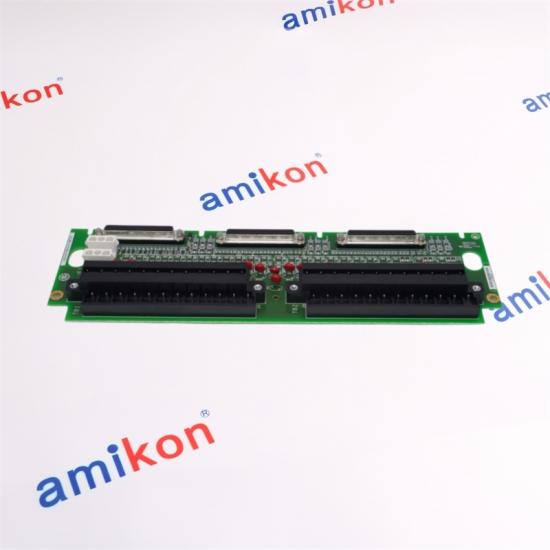
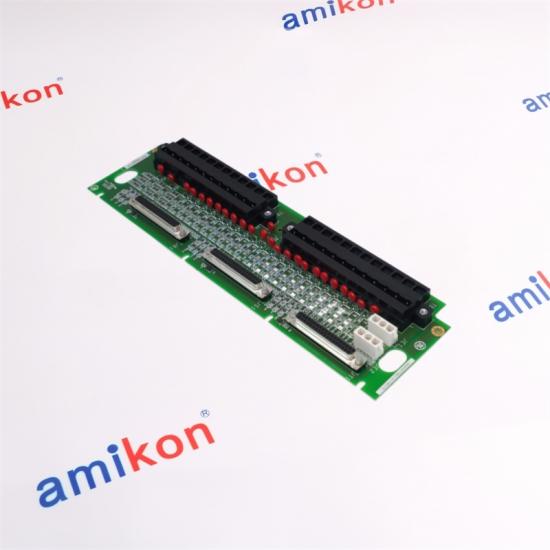
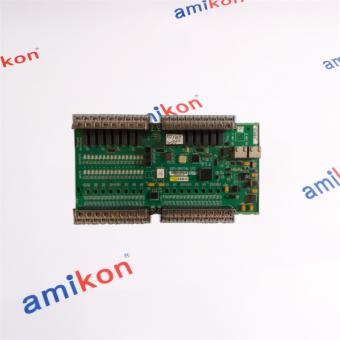
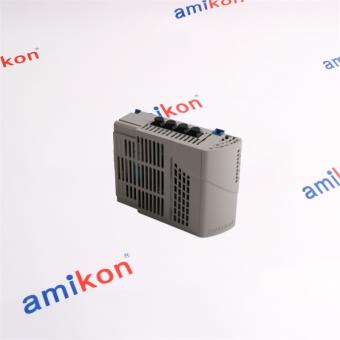
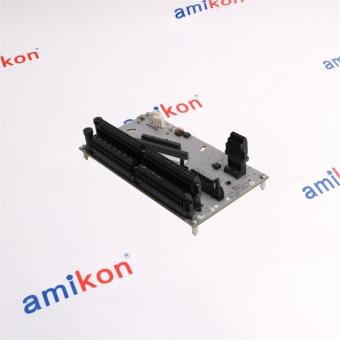
Two removable barrier terminal blocks with adjacent chassis-ground shield bars.
CONTACT INPUT WITH GROUP ISOLATION
IS200TBCIH1C
Mark VI / Mark VIe field termination for high-voltage contact excitation.
PROCESSOR SIDE
3
available processing paths
JR1 supports simplex; JR1, JS1 and JT1 support TMR.
H1C excitation class · nominal 125 V DC floating · operating range 100–145 V DC
TERMINATION ARCHITECTURE
Built Around Field Wiring, Excitation and Noise Control
Ⅰ
FIELD TERMINATION
Twenty-four dry contacts land on two removable 24-terminal barrier blocks. Each point accepts conductors up to #12 AWG. Shield bars beside the blocks connect to chassis ground.
Ⅱ
EXCITATION
JE1 and JE2 receive the floating 125 V DC contact-excitation supply used by the H1C board version.
Ⅲ
SIGNAL CONDITIONING
Onboard suppression circuits reduce the effect of surge and high-frequency noise before contact states reach the processing path.
The Terminal Board Stays; the Processor Interface Changes
MARK VI
MARK VIe
VCCC / VCRC connection
Molded cables connect the TBCI processor ports to VCCC or VCRC hardware in the VME rack.
↔
PDIA I/O-pack connection
One, two or three PDIA packs mount directly on the board according to simplex, dual or TMR requirements.
Simplex: JR1 TMR: JR1 + JS1 + JT1
Simplex: one PDIA Dual/TMR: two or three PDIAs
Selection boundary: H1C is the 125 V DC version. Do not replace it with H2C or H3C without confirming the actual field-excitation range and the approved system configuration.
Industrial Parts Support Built for Urgency
Two decades of sourcing experience, responsive service and global delivery coordination.
20 YEARS OF EXPERIENCE
Support for current, discontinued and difficult-to-find industrial automation parts.
ORDER MATCHING
Complete catalog-number and condition checks support confident maintenance orders.
EXPEDITED DELIVERY
Urgent handling options help reduce the duration and cost of unexpected downtime.
Returns and replacement: Contact us within seven days if a concern appears after receipt. Keep the item in its original condition and state the return reason. Resolution is arranged after receipt and inspection; return shipping costs are borne by the buyer.
PURCHASING QUESTIONS
IS200TBCIH1C FAQ
01
IS200TBCIH1C — Can IS200TBCIH1C be replaced by H2C or H3C?
No. H1C is the nominal 125 V DC floating-excitation version. H2C and H3C use different excitation ranges, so the installed field voltage must be matched.
02
IS200TBCIH1C — Can IS200TBCIH1C serve both Mark VI and Mark VIe?
Yes, but the processor interface is different. Mark VI uses molded cables to VCCC or VCRC, while Mark VIe mounts PDIA I/O packs directly on the terminal board.
03
IS200TBCIH1C — What should be checked before purchasing IS200TBCIH1C?
Confirm the complete catalog number, excitation voltage, terminal-block condition, JE1 and JE2 power connections, processor-side connectors and required redundancy arrangement.
04
IS200TBCIH1C — How does IS200TBCIH1C support TMR operation?
A TMR arrangement uses JR1, JS1 and JT1 to provide three processing paths. A simplex arrangement uses JR1 only.
05
IS200TBCIH1C — Which checks should follow IS200TBCIH1C replacement?
Verify excitation voltage and polarity, grounding and shielding, every contact state, channel diagnostics and correct transition of representative field contacts.




 Trust Guaranteed
 Customer Support


 IPv6 network supported
