

|
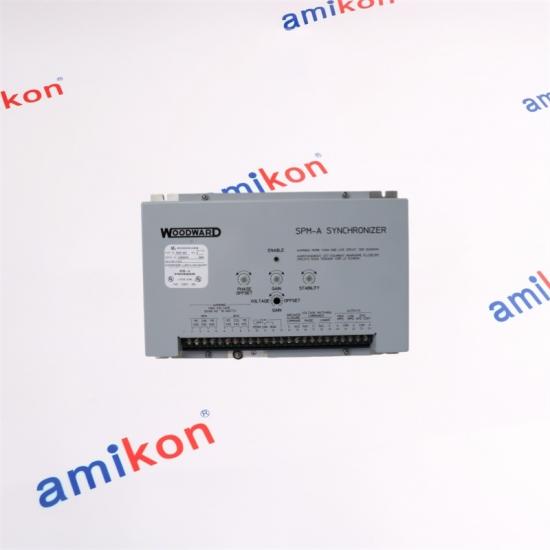
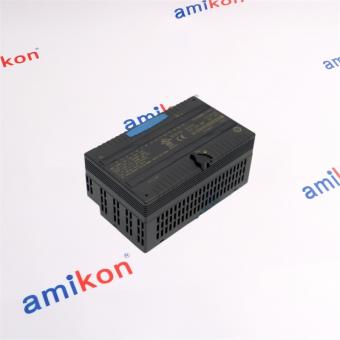
Manufacturer |
Woodward |
|
Model |
9907-029 |
|
Descripution |
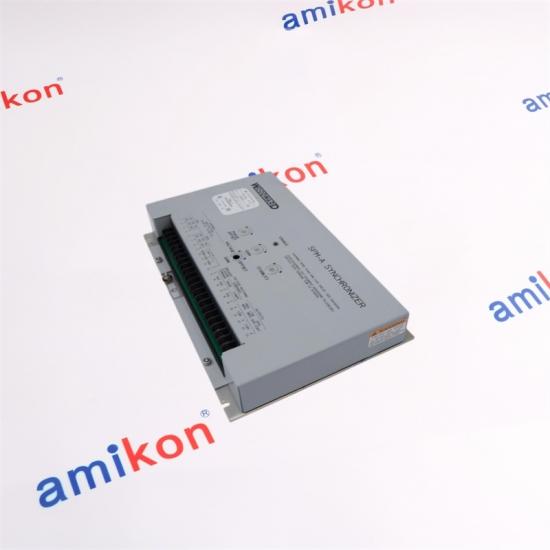
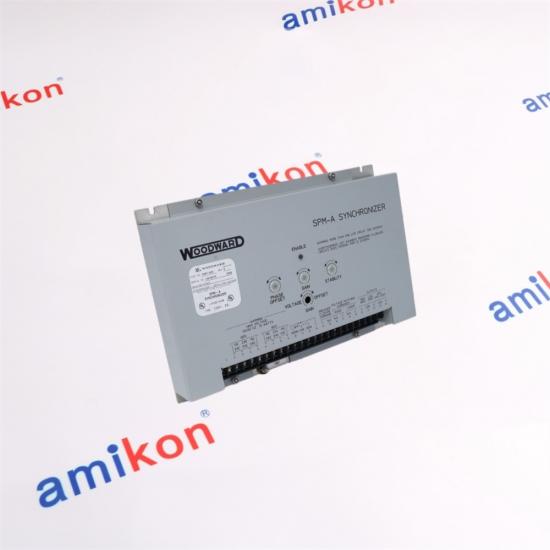
SPM-A Synchronizer |
|
Dimensions |
31.5x21x4.7cm |
|
Weight |
1.76 kg |
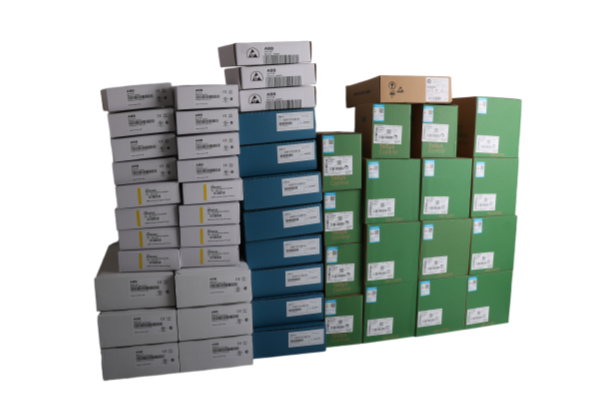
In Stock !!!
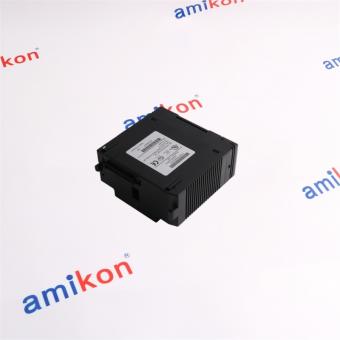
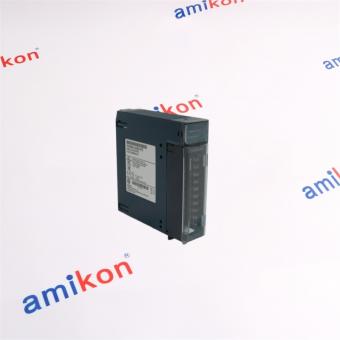
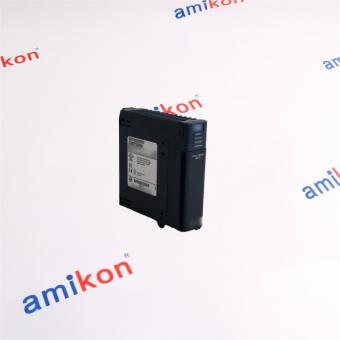
Woodward 9907-029 SPM-A Synchronizer

SPM‐A Synchronizer
Applications
Woodward’s SPM-A Speed and Phase Matching Synchronizer provides automatic frequency and phase matching when used with 2301, 2301A, and Electrically Powered Governor (EPG) electric load sharing control systems.
Description
The SPM-A Synchronizer automatically generates a signal to bias the speed of the prime mover of an off-line generator so that its frequency and phase match those of the bus. Tight control action is obtained by feeding the synchronizer’s speed bias signals directly into the electronic control’s speed loop error amplifier rather than through a motor-operated speed-setting potentiometer. The synchronizer automatically issues a signal to close the circuit breaker connecting the off-line unit to the bus when phase and frequency are matched within limits.
Four operating modes (Run, Check, Permissive, and Off) facilitate system testing and installation checkout without electrically disconnecting the synchronizer from the control system. These four modes are selected by an external switch (customer supplied) connected to the SPM-A Synchronizer.
The RUN mode allows synchronization and automatic breaker closure.
The CHECK mode allows testing correct synchronizing operation, but without circuit breaker closure.
The PERMISSIVE mode allows checking for acceptable synchronization, but does not trim speed or adjust voltage. If synchronization is correct, the breaker is allowed to close.
In the OFF mode, the synchronizer is out of operation.
The synchronizers are used in generator installations. Dynamics are adjustable. Only one model is required for fast or slow dynamics. The synchronizer is compatible with small or large diesels, gasoline or gas engines, and steam or gas turbines. Fast dynamics are designed to match the fast dynamics of small- to medium-size diesel engines. Slow dynamics are designed to match the slower dynamics of large diesel engines and turbomachinery and gas or gasoline engines.
There are four distinct functions in the SPM–A Synchronizer: the speed bias circuit, the enable circuit, the breaker closure circuit, and the voltage comparator circuit.
• Speed Bias Circuit
By using the phase lock technique to compare bus and generator voltages, the speed bias circuit output causes the off-line generator set, through the bias circuit to the electronic control, to alter speed to match the bus phase angle. A lockout circuit disconnects the speed bias output when the close breaker command ceases. The synchronizer output then remains disconnected until it is automatically reset. This reset will take place if the speed of the oncoming unit drifts outside the permissive synchronizing window.
• Enable Circuit
The enable circuit provides a secondary relative phase angle check and a coarse bus and generator voltage comparison. When conditions are acceptable, the enable circuit permits the breaker close circuit to issue a close breaker command. The enable circuit increases system reliability by preventing single-point failures from causing the close breaker command to be erroneously issued.
• Breaker Close Circuit
The breaker close output, unless inhibited by the enable circuit, issues the command to close the main breaker if conditions are acceptable. If the relative phase angle between the bus and the generator voltages is zero and stays zero while the main breaker is closing, perfect synchronization and paralleling result. It is not necessary that the phase angle always be zero, just that the phase angle be less than the greatest allowable value, which is +10 degrees (within the “window”) and has been within the window for the window dwell time. The synchronizer's phase match window dwell time may be chosen (by an internal selection switch for 1/8, 1/4, 1/2, or 1 second) to ensure that the phase angle is less than the greatest allowable phase difference when the breaker contacts engage. The close breaker command consists of the breaker close relay changing state for about one second.
• Voltage Comparator Circuit
In the voltage matching model, the voltage comparator circuit of the synchronizer compares bus and off-line generator voltages. When voltages are equal, there is no comparator circuit output. If a difference of input voltage exists, an increase or decrease relay signal is sent to the generator's voltage regulator. Where a difference in voltage exists, the breaker closure circuit and the speed/phase output are inhibited.
WOODWARD 9907-029 FAQ
Q1. How does the WOODWARD 9907-029 optimize electro-hydraulic actuator regulation in demanding turbine and engine governing applications?
The WOODWARD 9907-029 is engineered to provide high-precision actuator current control with fast dynamic response. Its configurable output ranges and stable regulation help maintain accurate fuel or steam valve positioning, improving overall governor performance under varying load conditions.
Q2. Why is the WOODWARD 9907-029 considered suitable for mission-critical industrial control environments requiring exceptional signal integrity?
The WOODWARD 9907-029 incorporates high-resolution analog output circuitry, excellent accuracy, and low thermal drift, enabling consistent actuator command signals. These characteristics reduce control deviation and enhance long-term operational stability in critical automation systems.
Q3. What electrical and actuator interface parameters should be evaluated before integrating the WOODWARD 9907-029 into an existing governor platform?
Before installation, users should verify the WOODWARD 9907-029 output current range, actuator resistance and inductance limits, power supply compatibility, and wiring configuration. Confirming these specifications ensures optimal actuator responsiveness and prevents output saturation.
Q4. In what ways does the WOODWARD 9907-029 improve closed-loop governor responsiveness during rapid load transients?
The WOODWARD 9907-029 delivers precise current modulation with programmable dither functionality, minimizing actuator hysteresis and friction. This enables faster valve movement, improved transient recovery, and smoother speed regulation during sudden load fluctuations.
Q5. Which technical characteristics distinguish the WOODWARD 9907-029 from conventional actuator driver modules in industrial automation systems?
The WOODWARD 9907-029 combines configurable output current ranges, 12-bit output resolution, approximately 0.1% full-scale accuracy at 25°C, low temperature drift (typically 150 ppm/°C), tunable 25 Hz square-wave dither, and compatibility with electro-hydraulic actuators, making it an excellent choice for high-performance turbine and engine control applications.
|
|
|
|
|
Miya zheng |
We Provide Many Well-known Brands
|
|
n Distributed Control System (DCS) |
|
n Programmable Logic Controller (PLC) |
|
|
n Remote input/output module (RTU) |
|
|
n Industrial PC (IPC) |
|
|
n Industrial low-frequency screen |
|
|
n Lowcapacity hard drives for industrial use SCSI (50,68,80Pin) |
|
|
n AnyBus (Gateway) |
|
|
n Human-machine interface |
|
|
n Industrial control related ancillary products |
Recommended
|
5437-843 |
8440-1934 |
9905-003 |
|
5501-467 |
9905-096 |
EASYGEN-2500-5 |
|
9905-969 |
9907-031 |
SA1509-24 |
|
9905-971 |
9907-252 |
5463-785 |
|
5501-376 |
8237-1481 |
5463-473 |
|
9905-968 |
9907-164 |
5464-414 |
|
8516-085 |
DYN2-94025-004 |
5464-544 |
|
9905-021 |
9907-135 |
5463-581 |

Amikon - We serve all walks of life in worldwide, help to provide and support their business processes, and adapt to the specific needs of each industry. PLC : Allen Bradley Rockwell, GE FANUC, Schneider Modicon Quantum DCS : ABB, Siemens MOORE, Foxboro, Westinghouse, YOKOGAWA ESD : Triconex, HIMA, Bently Nevada, ICS Triplex Excitation Cards : ABB, GE Marke Sales manager : Jessica | Email : sales3@amikon.cn Mobile : 86-18030235311 | Skype : jessica01235483

Amikon - We serve all walks of life in worldwide, help to provide and support their business processes, and adapt to the specific needs of each industry. PLC : Allen Bradley Rockwell, GE FANUC, Schneider Modicon Quantum DCS : ABB, Siemens MOORE, Foxboro, Westinghouse, YOKOGAWA ESD : Triconex, HIMA, Bently Nevada, ICS Triplex Excitation Cards : ABB, GE Marke Sales manager : Jessica | Email : sales3@amikon.cn Mobile : 86-18030235311 | Skype : jessica01235483

Amikon - We serve all walks of life in worldwide, help to provide and support their business processes, and adapt to the specific needs of each industry. PLC : Allen Bradley Rockwell, GE FANUC, Schneider Modicon Quantum DCS : ABB, Siemens MOORE, Foxboro, Westinghouse, YOKOGAWA ESD : Triconex, HIMA, Bently Nevada, ICS Triplex Excitation Cards : ABB, GE Marke Sales manager : Jessica | Email : sales3@amikon.cn Mobile : 86-18030235311 | Skype : jessica01235483

Amikon - We serve all walks of life in worldwide, help to provide and support their business processes, and adapt to the specific needs of each industry. PLC : Allen Bradley Rockwell, GE FANUC, Schneider Modicon Quantum DCS : ABB, Siemens MOORE, Foxboro, Westinghouse, YOKOGAWA ESD : Triconex, HIMA, Bently Nevada, ICS Triplex Excitation Cards : ABB, GE Marke Sales manager : Jessica | Email : sales3@amikon.cn Mobile : 86-18030235311 | Skype : jessica01235483

Amikon - We serve all walks of life in worldwide, help to provide and support their business processes, and adapt to the specific needs of each industry. PLC : Allen Bradley Rockwell, GE FANUC, Schneider Modicon Quantum DCS : ABB, Siemens MOORE, Foxboro, Westinghouse, YOKOGAWA ESD : Triconex, HIMA, Bently Nevada, ICS Triplex Excitation Cards : ABB, GE Marke Sales manager : Jessica | Email : sales3@amikon.cn Mobile : 86-18030235311 | Skype : jessica01235483

Amikon - We serve all walks of life in worldwide, help to provide and support their business processes, and adapt to the specific needs of each industry. PLC : Allen Bradley Rockwell, GE FANUC, Schneider Modicon Quantum DCS : ABB, Siemens MOORE, Foxboro, Westinghouse, YOKOGAWA ESD : Triconex, HIMA, Bently Nevada, ICS Triplex Excitation Cards : ABB, GE Marke Sales manager : Jessica | Email : sales3@amikon.cn Mobile : 86-18030235311 | Skype : jessica01235483

Amikon - We serve all walks of life in worldwide, help to provide and support their business processes, and adapt to the specific needs of each industry. PLC : Allen Bradley Rockwell, GE FANUC, Schneider Modicon Quantum DCS : ABB, Siemens MOORE, Foxboro, Westinghouse, YOKOGAWA ESD : Triconex, HIMA, Bently Nevada, ICS Triplex Excitation Cards : ABB, GE Marke Sales manager : Jessica | Email : sales3@amikon.cn Mobile : 86-18030235311 | Skype : jessica01235483

Amikon - We serve all walks of life in worldwide, help to provide and support their business processes, and adapt to the specific needs of each industry. PLC : Allen Bradley Rockwell, GE FANUC, Schneider Modicon Quantum DCS : ABB, Siemens MOORE, Foxboro, Westinghouse, YOKOGAWA ESD : Triconex, HIMA, Bently Nevada, ICS Triplex Excitation Cards : ABB, GE Marke Sales manager : Jessica | Email : sales3@amikon.cn Mobile : 86-18030235311 | Skype : jessica01235483


Inventory Products


More than 40.000.000 products available and worldwide support


 Trust Guaranteed
 Customer Support




 IPv6 network supported